
The short answer is yes — but “write off” almost never means what people hope it means. It doesn't mean the truck is free, and it doesn't mean the purchase price comes off this year's income. What it means is that a portion of the cost of owning and running that truck reduces your taxable income, and roughly five separate decisions determine how big that portion is.
Here's what actually drives the answer.
1. “Write Off” Means Deduct, Not Reimburse
A deduction reduces the income you pay tax on. It does not hand you the money back.
Spend on a truck and get the full deduction, and you save your tax rate on that amount — not the amount itself. This matters because the phrase “just write it off” has talked a lot of people into buying more truck than the business needed. The tax benefit is real, but it's a discount, not a rebate.
There's a second wrinkle: you usually don't deduct the purchase price all at once. Vehicles are capital property, so the cost is claimed gradually over several years through depreciation rather than in the year you buy.
What to do: Buy the truck the business actually needs. Then make sure you claim everything you're entitled to on it — which is where most of the real money is lost.
2. Business Use Is a Percentage, Not a Yes or No
This is the heart of it. Almost nothing about your truck is fully deductible or fully non-deductible. Nearly every expense gets multiplied by your business-use percentage.
That percentage comes from your kilometres — business kilometres divided by total kilometres. Which raises the question people get wrong most often: what counts as a business trip?
Business kilometres are the ones driven to earn income: job site to job site, a supply run or parts pickup, a dump run, driving out to quote a job. If your home is the principal place of business, the drive from your driveway to the first site counts too — and so does the drive home at the end of the day.
Personal kilometres are everything else. The one that surprises people: if you report to a fixed office or shop every morning, that drive is commuting, not business, no matter how early it is or how much gear is in the box. Personal errands are personal even in a lettered truck.
For most owner-operated trades businesses run from a home office, the business percentage is high — often much higher than the owner assumes. For someone reporting to a company shop every morning, it's lower than they hope.
What to do: Work out honestly where your principal place of business is. It's the hinge the whole calculation turns on, and it's worth a conversation with your accountant before you assume.
3. Not Every Truck Counts as a “Truck”
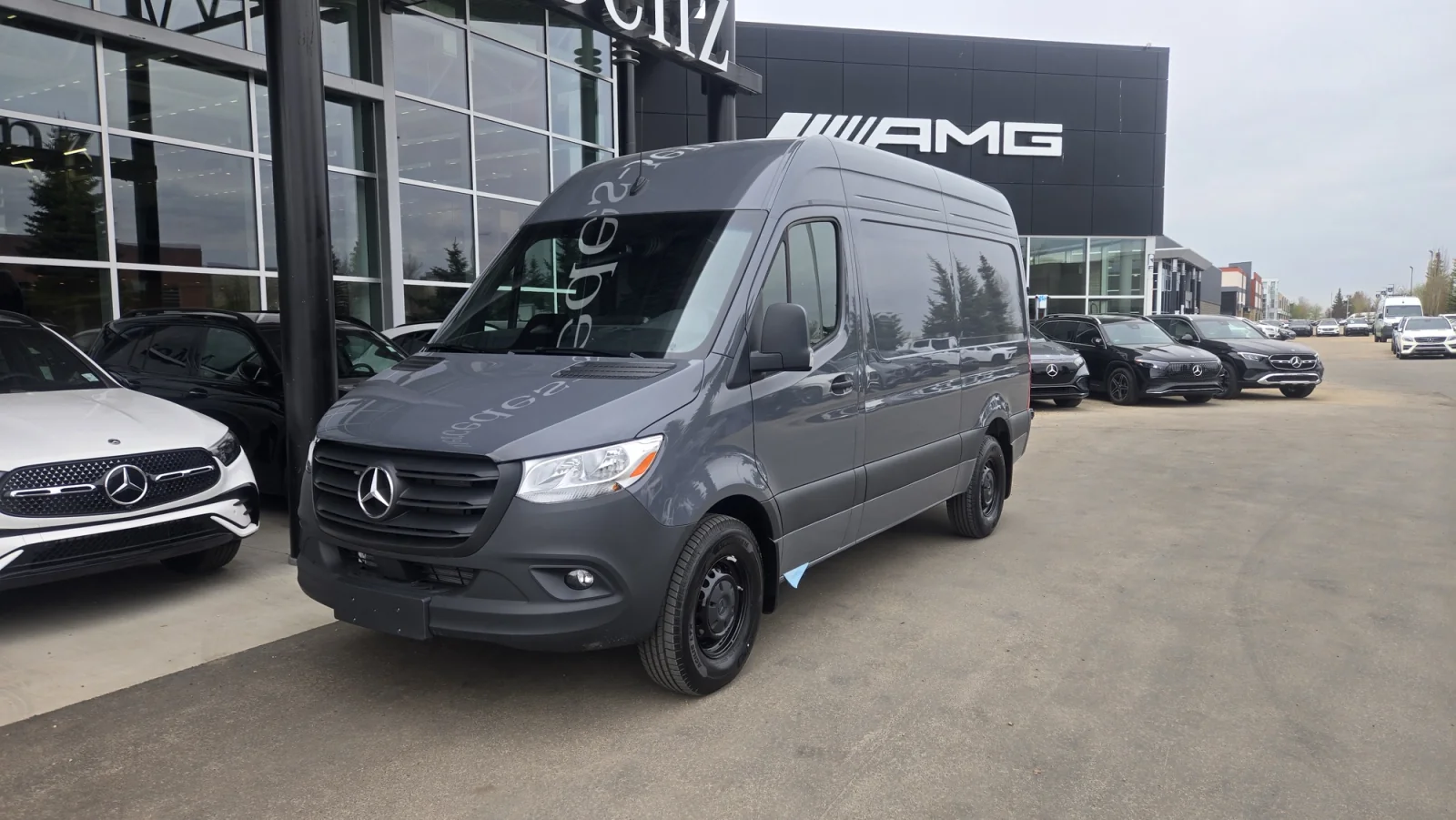
When a vehicle is purchased CRA caps how much of a vehicle's cost you can write off — but that cap applies to passenger vehicles, and a genuine work truck often isn't one.
Whether yours qualifies for the exclusion turns on two things: how many people it seats, and how much of its use is hauling goods and equipment rather than people. Clear those tests and the ceiling on your capital cost disappears. Miss them and you're capped, regardless of what you paid.
In practice this often separates a regular or extended cab hauling material from a crew cab that seats five and mostly carries the owner to appointments.
What to do: Check this before you buy, not at tax time. On a well-equipped truck the difference is thousands of dollars of deduction, and it's driven by cab configuration and use — both of which are decided at the dealership.
4. Whose Name It's In Changes the Math
If you're incorporated, you have a real choice: the company owns the truck, or you do.
Company owns it. The corporation deducts the operating costs and depreciation. But any personal use creates a taxable benefit on your T4 — a standby charge for having it available, plus an operating benefit for the personal kilometres. Those benefits can be substantial, and they surprise people.
You own it. The corporation pays you a reasonable per-kilometre allowance for business kilometres driven. That's deductible to the company and tax-free to you, with no standby charge and no benefit on your T4. CRA publishes what it considers a reasonable rate and updates it most years.
Neither option wins automatically. High business use and high personal use pull in opposite directions.
What to do: Decide before the next purchase, because unwinding it afterward means a transfer with its own tax consequences. And note that a flat monthly truck allowance — a fixed amount not tied to kilometres — is generally taxable to you. If you're going to do it, do it per kilometre.
5. Buying, Financing and Leasing Are Deducted Differently
All three are deductible. They just work differently.
•Buy outright — claim depreciation on the capital cost over several years, at the business-use percentage (may be capped as mentioned above).
•Finance — same depreciation on the vehicle, plus the interest portion of your payments. The principal portion of the payment isn't an expense; it's paying down what you already capitalized.
•Lease — deduct the lease payments themselves, at the business-use percentage, subject to a monthly cap.The monthly cap amount changes annually..
There's no universally better option. Leasing gives a cleaner, more even deduction; buying gives you an asset. The right choice usually depends more on cash flow and how long you keep vehicles than on tax.
What to do: Ask about the tax treatment while you're still comparing options, not after you've signed. Also ask about timing — it's generally when the vehicle is available for use, not when you paid, that determines the year the deduction starts.
6. The Truck Isn't the Only Deduction
Everything it costs to run the vehicle is deductible at your business-use percentage:
•Fuel
•Insurance
•Repairs and maintenance, tires
•Registration and licensing
•Loan interest or lease payments
•Car washes and cleaning
•Roadside assistance
•Parking for business purposes
Two notes. Parking at a client site or job site is a business expense; parking at your regular workplace generally isn't. And traffic fines and parking tickets are never deductible, no matter where you got them.
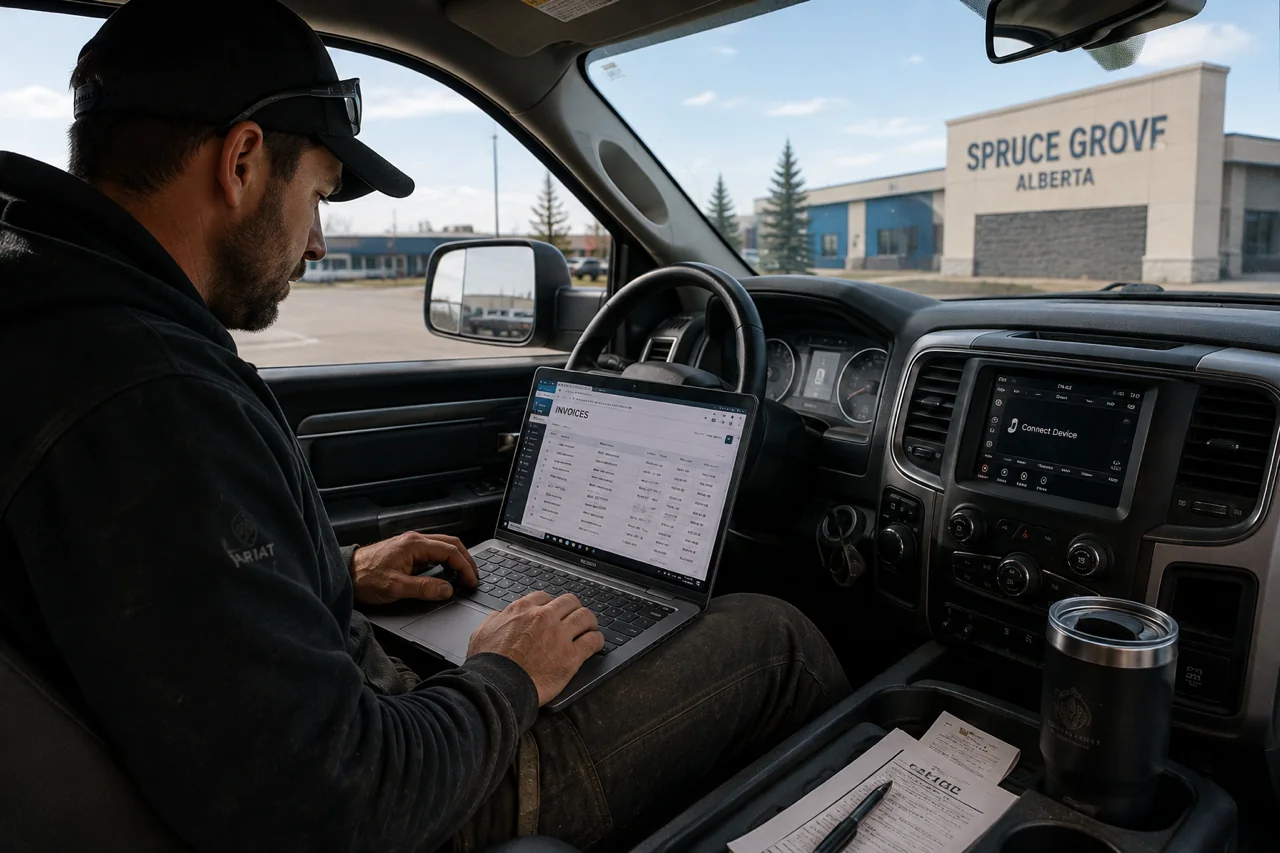
What to do: Set up your books so vehicle costs land in their own accounts as they're entered. Owners who sort this out at year-end often miss things — usually it is the small recurring ones that add up.
7. Without a Logbook, None of the Above Holds
Vehicle expenses are among the most commonly challenged deductions for trades businesses, and it's almost never because the owner was cheating. It's because there was no log.
Your business-use percentage is a claim. A logbook is the evidence. Without one, an auditor can reduce or deny the whole thing — and “I'm on the road constantly” isn't evidence.
A proper log records the date, destination, purpose and kilometres for business trips, plus your odometer at the start and end of the year. CRA also allows a simplified method: keep one full year of detailed records as a base year, then a representative sample period in later years, provided your use stays consistent. That's a reasonable compromise, but the base year has to happen first.
What to do: Use an app. Most accounting software has mileage tracking built in, and several standalone apps run in the background off your phone's location. The whole problem disappears for about the cost of a coffee a month.
8. Three Myths Worth Retiring
“It's lettered, so it's one hundred percent business.” Signage and wraps don't change anything. A wrapped truck driven to the lake is a personal trip in an advertisement. The wrap itself is a deductible advertising expense — the driving still follows the same rules.
“I bought it in December, so I wrote it off this year.” Timing rules limit what you can claim in the first year, and the deduction generally starts when the vehicle is available for use. A late-December purchase rarely produces the full-year deduction people expect.
“My buddy writes off his whole truck.” Maybe he qualifies for an exclusion you don't. Maybe his business use genuinely is near total. Or maybe he's going to have an unpleasant conversation with CRA. Truck advice from the job site is worth exactly what you paid for it.

Where a CPA Fits
Almost every decision above is cheap to get right in advance and expensive to fix afterward. Cab configuration, ownership, lease versus buy, timing — all of it is settled before you sign, and none of it can be re-decided in April.
MaryLee Vaughan Professional Corporation is a Chartered Professional Accountant practice in Spruce Grove, serving the area for more than 25 years and working with Alberta small businesses and trades companies — corporate and personal tax, year-end financial statements, tax planning, and CRA notices, reviews and appeals.
If you've got a truck purchase coming, or you're not confident last year's claim would hold up, book a free 20-minute consultation. No pressure and no jargon.
This article is general information, not tax advice. It describes how these rules work rather than the specific dollar limits, which change from year to year. Eligibility depends on your circumstances — confirm the current figures and the details for your situation with your accountant before acting.